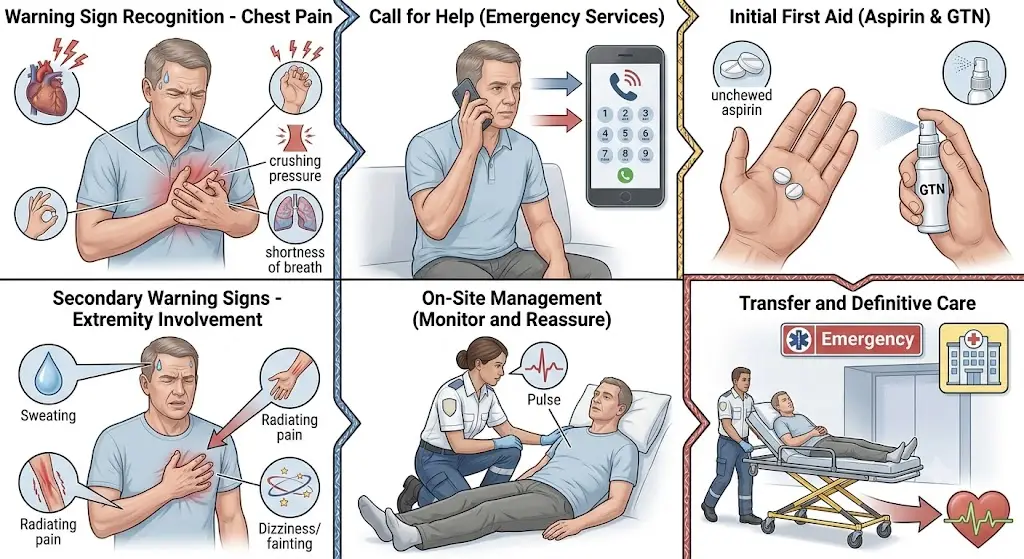
Coronary artery disease is one of the leading causes of serious heart related health problems. It develops when the blood vessels responsible for supplying oxygen rich blood to the heart become narrowed or blocked. Early and accurate diagnosis is essential because identifying these blockages can help doctors determine the most appropriate treatment and reduce the risk of a heart attack.
Coronary angiography is an important diagnostic procedure used to examine the blood vessels of the heart. It provides detailed information about the condition of the coronary arteries and helps cardiologists identify narrowing or blockages that may be affecting blood flow.
For patients experiencing chest pain, unexplained shortness of breath or symptoms suggesting heart disease, coronary angiography can play a crucial role in determining the underlying cause and planning further treatment.
What Is Coronary Angiography?
Coronary angiography is a specialised medical imaging procedure used to visualise the coronary arteries. These arteries supply oxygen and nutrients to the heart muscle and are essential for normal heart function.
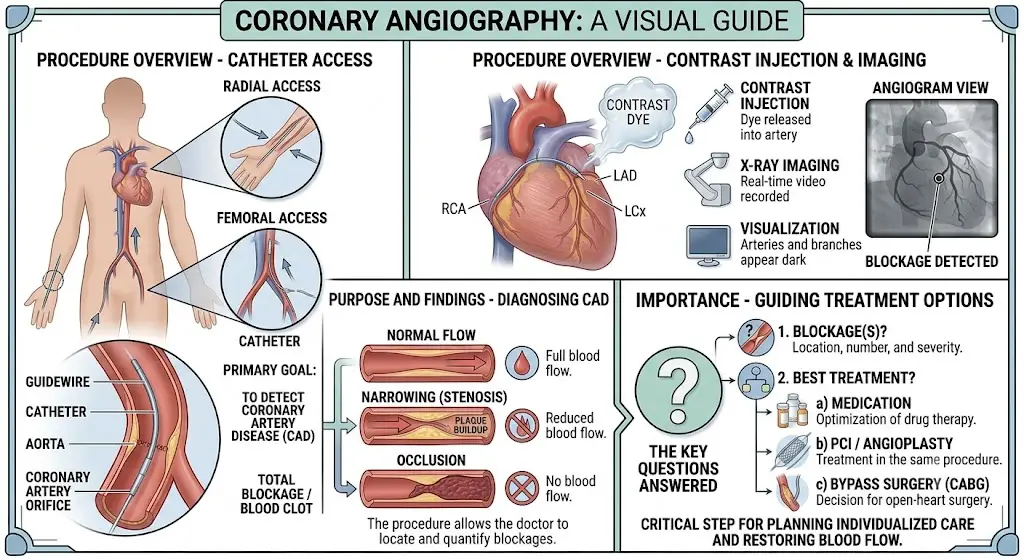
During the procedure, a special contrast dye is introduced into the coronary arteries through a thin and flexible tube called a catheter. Advanced X ray imaging is then used to capture detailed images of blood flowing through the arteries.
The images produced during coronary angiography allow doctors to examine the blood vessels and identify areas where blood flow may be reduced or completely blocked.
The procedure is commonly performed in a specialised cardiac catheterisation laboratory by an experienced cardiology team.
Why Is Coronary Angiography Performed?
Coronary angiography may be recommended when a doctor suspects that a patient has significant narrowing or blockage in the coronary arteries.
Some common reasons for performing the procedure include persistent or unexplained chest pain, symptoms of reduced blood flow to the heart, abnormal results from cardiac tests or a suspected heart attack.
It may also be recommended for patients who have experienced sudden worsening of existing heart disease.
Coronary angiography helps doctors answer several important questions. It can show whether coronary artery blockages are present, identify their location and determine how severely the arteries have been narrowed.
This information is valuable when deciding whether a patient may benefit from medication, lifestyle modifications, angioplasty, stent placement or other cardiac treatments.
How Is the Procedure Performed?
Before the procedure begins, the patient is carefully evaluated by the medical team. Basic health information, medications and possible allergies may be reviewed. Patients may also undergo certain blood tests and other investigations before coronary angiography.
The procedure usually begins with the preparation and cleaning of the area where the catheter will be inserted. A local anaesthetic is generally used to numb the area.
The catheter may be inserted through an artery in the wrist or the groin. The cardiologist carefully guides the catheter through the blood vessels until it reaches the coronary arteries.
A contrast dye is then injected through the catheter. As the dye travels through the coronary arteries, specialised X ray imaging captures detailed pictures of the blood vessels.
Patients may occasionally experience a temporary sensation of warmth when the contrast dye is injected. The medical team continuously monitors the patient’s heart rhythm and vital signs throughout the procedure.
Once the necessary images have been obtained, the catheter is carefully removed and pressure or a specialised closure device may be used to control bleeding at the insertion site.
What Can Coronary Angiography Detect?
Coronary angiography provides valuable information about the condition of the coronary arteries.
The procedure can help identify narrowing caused by the buildup of fatty deposits within the artery walls. It can also reveal partial or complete blockages that may restrict blood flow to the heart muscle.
Doctors can evaluate the number of arteries involved and determine the severity of the narrowing. The procedure can also provide information about the structure and overall pattern of the coronary arteries.
This detailed evaluation helps cardiologists develop an appropriate treatment strategy based on the individual needs of the patient.
What Happens After the Procedure?
After coronary angiography, patients are usually monitored for a period of time to ensure that there are no immediate complications.
The insertion site is checked regularly for bleeding or swelling. Patients who undergo the procedure through the wrist may often be able to sit up and move earlier, depending on their medical condition and the advice of their healthcare team.
Patients may be advised to drink sufficient fluids to help the body eliminate the contrast dye. It is also important to follow all instructions provided by the treating medical team regarding physical activity, medications and care of the insertion site.
Some patients may be discharged on the same day, while others may require a longer period of observation depending on their overall health and the findings of the procedure.
Is Coronary Angiography Safe?
Coronary angiography is a commonly performed procedure and is generally considered safe when carried out by an experienced cardiac team.
However, like any medical procedure, it carries certain risks. Minor complications may include bruising, bleeding or discomfort around the catheter insertion site.
More serious complications are uncommon but can include allergic reactions to the contrast dye, damage to a blood vessel, abnormal heart rhythms or other cardiovascular complications.
Before the procedure, the cardiologist discusses the potential benefits and risks with the patient and considers factors such as age, overall health and existing medical conditions.
The benefits of accurately diagnosing significant coronary artery disease often outweigh the risks for patients who have symptoms or test results suggesting a serious heart condition.
Can Angioplasty Be Performed During Coronary Angiography?
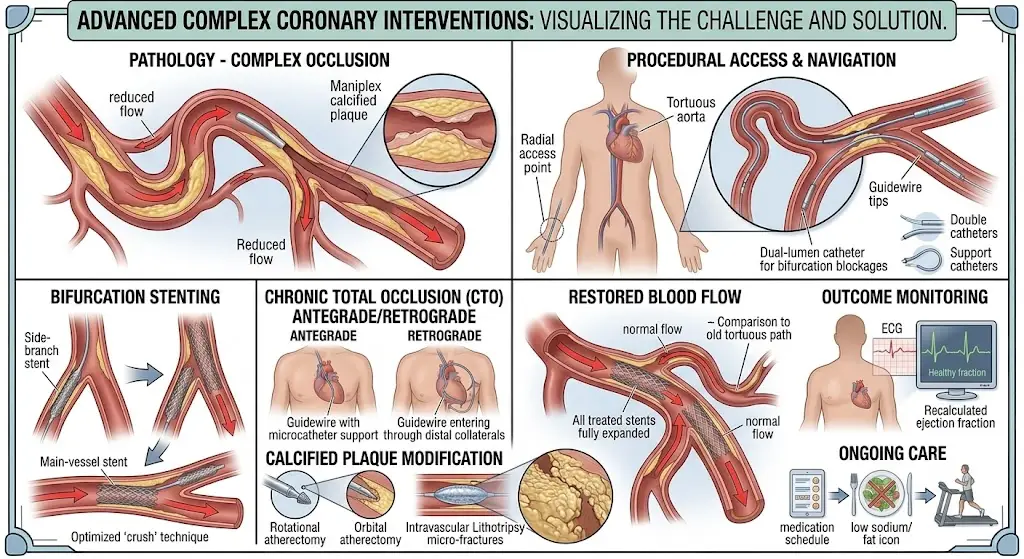
In some situations, coronary angiography may identify a significant blockage that requires immediate treatment. Depending on the patient’s condition and the findings of the procedure, angioplasty and stent placement may sometimes be performed during the same session.
Angioplasty involves the use of a specialised balloon to improve blood flow through a narrowed artery. A stent may then be placed to help keep the artery open.
This approach can reduce the need for a separate procedure and may be particularly important in certain emergency situations.
The decision to perform angioplasty depends on several factors, including the location and severity of the blockage and the overall condition of the patient.
Preparing for Coronary Angiography
Proper preparation can help ensure that the procedure is performed safely and effectively.
Patients should provide their healthcare team with complete information about their medical history and current medications. It is particularly important to mention any known allergies, kidney problems, bleeding disorders or previous reactions to contrast dye.
The doctor may provide specific instructions regarding eating, drinking and medications before the procedure.
Patients should follow these instructions carefully and should not stop prescribed medications without consulting their doctor.
It may also be helpful to arrange for a family member or trusted person to accompany the patient, particularly if the doctor advises against driving immediately after the procedure.
The Importance of Early Diagnosis
Coronary artery disease may develop gradually and remain unnoticed until it causes significant symptoms or a serious cardiac event.
Some individuals may experience chest discomfort during physical activity, while others may have symptoms only when the disease has progressed significantly.
Early diagnosis allows doctors to identify coronary artery disease and recommend appropriate treatment before more serious complications develop.
Maintaining healthy blood pressure, controlling cholesterol levels, managing diabetes, avoiding tobacco and following a heart healthy lifestyle can also play an important role in reducing cardiovascular risk.
Regular medical checkups are especially important for individuals with a family history of heart disease or multiple cardiovascular risk factors.
Conclusion
Coronary angiography is an important diagnostic procedure that provides detailed information about the blood vessels supplying the heart. It helps cardiologists identify narrowing and blockages in the coronary arteries and supports accurate treatment planning.
For patients with suspected coronary artery disease, timely evaluation can help prevent serious complications and provide valuable guidance regarding the next steps in treatment.
If you experience persistent chest discomfort, unexplained breathlessness or other symptoms that may indicate a heart problem, seeking timely medical evaluation is essential. A qualified cardiologist can assess your symptoms and determine whether coronary angiography or another diagnostic test is appropriate for your condition.
Early diagnosis, timely treatment and regular cardiac care remain among the most important steps toward protecting long term heart health.

Newsletter
Sign up our newsletter to get update information, news and free insight.
Popular Categories
Latest Post