Dr Utkarsh Kumar Consultant | Cardiologist-Heart Care Centre

Complex Coronary Angioplasty: Advanced Treatment for Challenging Heart Artery Blockages
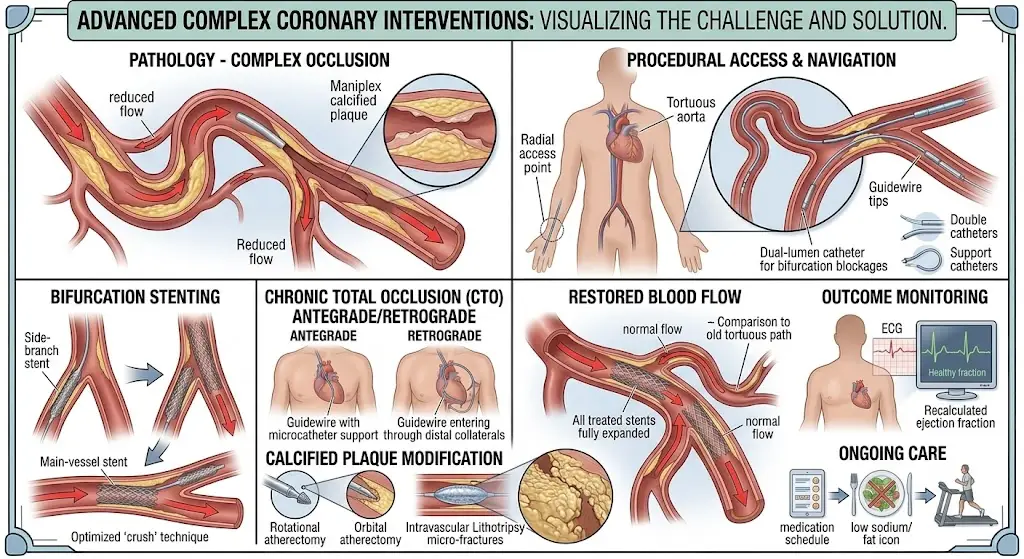
Complex Coronary Angioplasty: Advanced Treatment for Challenging Heart Artery Blockages

Coronary artery disease is a serious condition that develops when the blood vessels supplying oxygen rich blood to the heart become narrowed or blocked. These blockages can reduce blood flow to the heart muscle and may lead to chest pain, breathlessness or even a heart attack.

While many coronary artery blockages can be treated with conventional angioplasty, some cases are more challenging and require advanced techniques. Complex coronary angioplasty is a specialised procedure designed to treat difficult blockages and restore blood flow to the heart.

With advances in interventional cardiology, many patients with complicated coronary artery disease can now be treated using sophisticated imaging, specialised equipment and advanced procedural techniques. Understanding complex coronary angioplasty can help patients and their families make informed decisions about their cardiac care.

What Is Complex Coronary Angioplasty?

Complex coronary angioplasty is an advanced cardiac procedure used to open severely narrowed or blocked coronary arteries. It involves the use of specialised techniques and equipment to treat blockages that may be difficult to manage through standard angioplasty.

The procedure is performed by an experienced interventional cardiologist in a specialised cardiac catheterisation laboratory.

Like conventional angioplasty, the primary objective is to improve blood flow through the affected coronary artery. However, complex cases often involve challenging anatomical conditions or multiple areas of blockage.

The cardiologist carefully evaluates the patient’s coronary anatomy and overall health before determining the most appropriate treatment strategy.

When Is an Angioplasty Considered Complex?

A coronary angioplasty may be considered complex when the blockage presents technical or anatomical challenges.

One common example is a chronic total occlusion. This refers to a coronary artery that has been completely blocked for an extended period. Treating such a blockage can require specialised guidewires and advanced techniques to safely cross the affected area.

Another challenging condition involves heavily calcified arteries. Calcium deposits can make the artery rigid and difficult to expand with a standard angioplasty balloon.

Some patients may have long areas of narrowing or multiple blockages affecting different coronary arteries. Complex procedures may also involve blockages located at important branching points within the coronary circulation.

Other challenging situations can include previously treated arteries that have become narrowed again or patients with complex coronary anatomy.

Each case is different and requires careful evaluation before treatment.

The Importance of Detailed Assessment

Before complex coronary angioplasty, the cardiology team performs a detailed assessment of the patient’s condition.

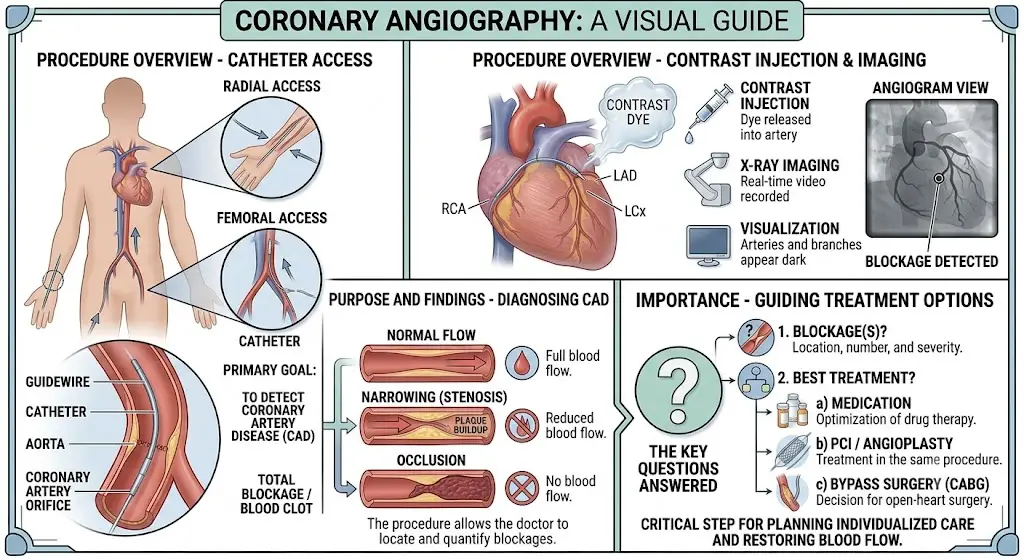
Coronary angiography is commonly used to identify the location and severity of blockages. In some cases, additional intravascular imaging may be used to obtain a more detailed view from inside the blood vessel.

Techniques such as intravascular ultrasound and optical coherence tomography can provide valuable information about the structure of the artery, the nature of the blockage and the appropriate size of the treatment devices.

Accurate imaging allows the interventional cardiologist to plan the procedure more effectively and select the most suitable treatment approach.

The patient’s medical history, heart function, kidney function and other health conditions are also considered before the procedure.

How Is Complex Coronary Angioplasty Performed?

Complex coronary angioplasty is generally performed using a catheter based approach.

The procedure usually begins with access to an artery, commonly through the wrist or, in some cases, the groin. A thin catheter is carefully guided through the blood vessels toward the coronary arteries.

The cardiologist then uses specialised guidewires to reach and cross the narrowed or blocked section of the artery.

Depending on the nature of the blockage, different techniques may be used to prepare the artery before placing a stent.

A small balloon may be used to widen the narrowed section. In heavily calcified arteries, specialised devices may be required to modify or prepare the calcium before the artery can be properly expanded.

After the blockage has been treated, a coronary stent may be placed to help maintain blood flow through the artery.

Advanced imaging may again be used to confirm that the stent is properly expanded and positioned.

Advanced Technologies Used During Complex Procedures

Modern interventional cardiology has introduced several technologies that can assist in the treatment of complex coronary artery disease.

Intravascular ultrasound provides detailed images of the artery from inside the blood vessel. It can help the cardiologist assess plaque characteristics and accurately determine the size of the artery.

Optical coherence tomography provides high resolution imaging and may offer additional information about the structure of the coronary artery.

Certain procedures involving severe calcium deposits may require specialised techniques to modify the hardened plaque. This can help create adequate space for the balloon and stent.

The choice of technology depends on the individual patient’s anatomy and the characteristics of the blockage.

These advanced approaches have improved the ability of experienced cardiac specialists to treat increasingly complex coronary artery conditions.

Complex Coronary Angioplasty for Chronic Total Occlusion

A chronic total occlusion occurs when a coronary artery has been completely blocked for a significant period of time.

Treating these blockages can be technically challenging because the cardiologist must carefully guide specialised wires through or around the blocked segment.

Advanced techniques may be used to approach the blockage from different directions within the coronary circulation.

The decision to treat a chronic total occlusion depends on several factors. These include the patient’s symptoms, the amount of heart muscle affected and the overall pattern of coronary artery disease.

Careful patient selection and detailed procedural planning are essential.

Benefits of Complex Coronary Angioplasty

The primary goal of complex coronary angioplasty is to restore or improve blood flow to the heart muscle.

Successful treatment may help reduce symptoms such as chest discomfort and breathlessness. For suitable patients, improving blood flow may also support better physical activity and overall quality of life.

Complex angioplasty can provide a less invasive treatment option for certain patients who may otherwise require more extensive cardiac surgery.

The procedure is performed through small access points rather than a large surgical incision.

Recovery may therefore be quicker for many patients, although the recovery process varies depending on the complexity of the procedure and the patient’s overall health.

Understanding the Possible Risks

Complex coronary angioplasty is a highly specialised medical procedure and carries certain risks.

The level of risk depends on factors such as the complexity of the blockage, the patient’s age and the presence of other medical conditions.

Potential complications can include bleeding at the access site, injury to a blood vessel, abnormal heart rhythms or problems related to the coronary artery during the procedure.

There may also be risks associated with the contrast material used during angiography, particularly in patients with reduced kidney function.

Serious complications are uncommon but remain possible. This is why complex procedures should be performed by experienced cardiac teams with appropriate facilities and emergency support.

Before the procedure, the cardiologist discusses the expected benefits and potential risks with the patient.

Recovery After Complex Coronary Angioplasty

After the procedure, the patient is closely monitored by the healthcare team.

The access site is checked for bleeding or swelling, and the patient’s heart rhythm and vital signs are monitored.

Some patients may be discharged relatively soon after treatment, while others may require a longer hospital stay depending on the complexity of the procedure and their overall condition.

Patients who receive coronary stents are often prescribed medications that help prevent blood clots from forming within the stent.

It is extremely important to take all prescribed medications exactly as directed by the treating cardiologist. Patients should never stop these medicines without consulting their healthcare team.

Follow up appointments are also important for monitoring recovery and long term heart health.

Life After the Procedure

A successful angioplasty is an important step in treating coronary artery disease, but it does not eliminate the need for long term heart care.

Patients should focus on maintaining healthy blood pressure and cholesterol levels. Managing diabetes, avoiding tobacco products and following a heart healthy diet can help reduce the risk of future cardiovascular problems.

Regular physical activity, when recommended by a doctor, can also support overall heart health.

Attending follow up appointments allows the cardiology team to monitor progress and address any new symptoms or concerns.

Conclusion

Complex coronary angioplasty represents an important advancement in the treatment of challenging coronary artery blockages. Using advanced imaging, specialised devices and carefully planned techniques, experienced interventional cardiologists can treat many complicated forms of coronary artery disease.

Every patient is unique, and the most appropriate treatment depends on the location and complexity of the blockage, the patient’s symptoms and overall health.

For individuals with significant coronary artery disease, timely evaluation by a qualified cardiologist is essential. A detailed assessment can help determine whether complex coronary angioplasty is an appropriate treatment option.

Early diagnosis, expert treatment and consistent long term cardiac care can play a vital role in protecting heart function and improving quality of life.

Complex Coronary Angioplasty: Advanced Treatment for Challenging Heart Artery Blockages

Complex Coronary Angioplasty: Advanced Treatment for Challenging Heart Artery Blockages

Coronary artery disease is a serious condition that develops when the blood vessels supplying oxygen rich blood to the heart become narrowed or blocked. These blockages can reduce blood flow to the heart muscle and may lead to chest pain, breathlessness or even a heart attack.

While many coronary artery blockages can be treated with conventional angioplasty, some cases are more challenging and require advanced techniques. Complex coronary angioplasty is a specialised procedure designed to treat difficult blockages and restore blood flow to the heart.

With advances in interventional cardiology, many patients with complicated coronary artery disease can now be treated using sophisticated imaging, specialised equipment and advanced procedural techniques. Understanding complex coronary angioplasty can help patients and their families make informed decisions about their cardiac care.

What Is Complex Coronary Angioplasty?

Complex coronary angioplasty is an advanced cardiac procedure used to open severely narrowed or blocked coronary arteries. It involves the use of specialised techniques and equipment to treat blockages that may be difficult to manage through standard angioplasty.

The procedure is performed by an experienced interventional cardiologist in a specialised cardiac catheterisation laboratory.

Like conventional angioplasty, the primary objective is to improve blood flow through the affected coronary artery. However, complex cases often involve challenging anatomical conditions or multiple areas of blockage.

The cardiologist carefully evaluates the patient’s coronary anatomy and overall health before determining the most appropriate treatment strategy.

When Is an Angioplasty Considered Complex?

A coronary angioplasty may be considered complex when the blockage presents technical or anatomical challenges.

One common example is a chronic total occlusion. This refers to a coronary artery that has been completely blocked for an extended period. Treating such a blockage can require specialised guidewires and advanced techniques to safely cross the affected area.

Another challenging condition involves heavily calcified arteries. Calcium deposits can make the artery rigid and difficult to expand with a standard angioplasty balloon.

Some patients may have long areas of narrowing or multiple blockages affecting different coronary arteries. Complex procedures may also involve blockages located at important branching points within the coronary circulation.

Other challenging situations can include previously treated arteries that have become narrowed again or patients with complex coronary anatomy.

Each case is different and requires careful evaluation before treatment.

The Importance of Detailed Assessment

Before complex coronary angioplasty, the cardiology team performs a detailed assessment of the patient’s condition.

Coronary angiography is commonly used to identify the location and severity of blockages. In some cases, additional intravascular imaging may be used to obtain a more detailed view from inside the blood vessel.

Techniques such as intravascular ultrasound and optical coherence tomography can provide valuable information about the structure of the artery, the nature of the blockage and the appropriate size of the treatment devices.

Accurate imaging allows the interventional cardiologist to plan the procedure more effectively and select the most suitable treatment approach.

The patient’s medical history, heart function, kidney function and other health conditions are also considered before the procedure.

How Is Complex Coronary Angioplasty Performed?

Complex coronary angioplasty is generally performed using a catheter based approach.

The procedure usually begins with access to an artery, commonly through the wrist or, in some cases, the groin. A thin catheter is carefully guided through the blood vessels toward the coronary arteries.

The cardiologist then uses specialised guidewires to reach and cross the narrowed or blocked section of the artery.

Depending on the nature of the blockage, different techniques may be used to prepare the artery before placing a stent.

A small balloon may be used to widen the narrowed section. In heavily calcified arteries, specialised devices may be required to modify or prepare the calcium before the artery can be properly expanded.

After the blockage has been treated, a coronary stent may be placed to help maintain blood flow through the artery.

Advanced imaging may again be used to confirm that the stent is properly expanded and positioned.

Advanced Technologies Used During Complex Procedures

Modern interventional cardiology has introduced several technologies that can assist in the treatment of complex coronary artery disease.

Intravascular ultrasound provides detailed images of the artery from inside the blood vessel. It can help the cardiologist assess plaque characteristics and accurately determine the size of the artery.

Optical coherence tomography provides high resolution imaging and may offer additional information about the structure of the coronary artery.

Certain procedures involving severe calcium deposits may require specialised techniques to modify the hardened plaque. This can help create adequate space for the balloon and stent.

The choice of technology depends on the individual patient’s anatomy and the characteristics of the blockage.

These advanced approaches have improved the ability of experienced cardiac specialists to treat increasingly complex coronary artery conditions.

Complex Coronary Angioplasty for Chronic Total Occlusion

A chronic total occlusion occurs when a coronary artery has been completely blocked for a significant period of time.

Treating these blockages can be technically challenging because the cardiologist must carefully guide specialised wires through or around the blocked segment.

Advanced techniques may be used to approach the blockage from different directions within the coronary circulation.

The decision to treat a chronic total occlusion depends on several factors. These include the patient’s symptoms, the amount of heart muscle affected and the overall pattern of coronary artery disease.

Careful patient selection and detailed procedural planning are essential.

Benefits of Complex Coronary Angioplasty

The primary goal of complex coronary angioplasty is to restore or improve blood flow to the heart muscle.

Successful treatment may help reduce symptoms such as chest discomfort and breathlessness. For suitable patients, improving blood flow may also support better physical activity and overall quality of life.

Complex angioplasty can provide a less invasive treatment option for certain patients who may otherwise require more extensive cardiac surgery.

The procedure is performed through small access points rather than a large surgical incision.

Recovery may therefore be quicker for many patients, although the recovery process varies depending on the complexity of the procedure and the patient’s overall health.

Understanding the Possible Risks

Complex coronary angioplasty is a highly specialised medical procedure and carries certain risks.

The level of risk depends on factors such as the complexity of the blockage, the patient’s age and the presence of other medical conditions.

Potential complications can include bleeding at the access site, injury to a blood vessel, abnormal heart rhythms or problems related to the coronary artery during the procedure.

There may also be risks associated with the contrast material used during angiography, particularly in patients with reduced kidney function.

Serious complications are uncommon but remain possible. This is why complex procedures should be performed by experienced cardiac teams with appropriate facilities and emergency support.

Before the procedure, the cardiologist discusses the expected benefits and potential risks with the patient.

Recovery After Complex Coronary Angioplasty

After the procedure, the patient is closely monitored by the healthcare team.

The access site is checked for bleeding or swelling, and the patient’s heart rhythm and vital signs are monitored.

Some patients may be discharged relatively soon after treatment, while others may require a longer hospital stay depending on the complexity of the procedure and their overall condition.

Patients who receive coronary stents are often prescribed medications that help prevent blood clots from forming within the stent.

It is extremely important to take all prescribed medications exactly as directed by the treating cardiologist. Patients should never stop these medicines without consulting their healthcare team.

Follow up appointments are also important for monitoring recovery and long term heart health.

Life After the Procedure

A successful angioplasty is an important step in treating coronary artery disease, but it does not eliminate the need for long term heart care.

Patients should focus on maintaining healthy blood pressure and cholesterol levels. Managing diabetes, avoiding tobacco products and following a heart healthy diet can help reduce the risk of future cardiovascular problems.

Regular physical activity, when recommended by a doctor, can also support overall heart health.

Attending follow up appointments allows the cardiology team to monitor progress and address any new symptoms or concerns.

Conclusion

Complex coronary angioplasty represents an important advancement in the treatment of challenging coronary artery blockages. Using advanced imaging, specialised devices and carefully planned techniques, experienced interventional cardiologists can treat many complicated forms of coronary artery disease.

Every patient is unique, and the most appropriate treatment depends on the location and complexity of the blockage, the patient’s symptoms and overall health.

For individuals with significant coronary artery disease, timely evaluation by a qualified cardiologist is essential. A detailed assessment can help determine whether complex coronary angioplasty is an appropriate treatment option.

Early diagnosis, expert treatment and consistent long term cardiac care can play a vital role in protecting heart function and improving quality of life.

Facebook
Twitter
LinkedIn
Print

Leave a Reply

Your email address will not be published. Required fields are marked *

Facebook
Twitter
LinkedIn
Print

Leave a Reply

Your email address will not be published. Required fields are marked *