Structural Heart Interventions: Advanced Treatment for Complex Heart Conditions
Structural heart disease refers to abnormalities affecting the physical structure of the heart. These conditions may involve the heart valves, walls, chambers or other important structures responsible for maintaining normal blood flow. Some structural heart conditions are present from birth, while others develop later in life because of ageing, infection, previous heart disease or other medical conditions.
Advances in modern cardiology have transformed the treatment of structural heart disease. Many conditions that previously required open heart surgery can now be treated using minimally invasive techniques. These procedures are known as structural heart interventions.
Structural heart interventions use specialised catheters, imaging technology and advanced devices to diagnose and treat certain heart abnormalities. These procedures can offer an important treatment option for selected patients, particularly those who may face a higher risk from conventional surgery.
Understanding structural heart interventions can help patients and their families make informed decisions about advanced cardiac treatment.
What Is Structural Heart Disease?
The heart is a complex organ consisting of four chambers, four major valves and several important blood vessels and supporting structures. Any abnormality affecting these structures can interfere with the normal functioning of the heart.
Structural heart disease can involve heart valve disorders, defects in the walls separating the heart chambers or other abnormalities affecting blood flow.
Some people are born with structural heart conditions. These are known as congenital heart defects. Other structural problems develop over time.
For example, heart valves may become narrowed, preventing blood from flowing normally through the heart. A valve may also fail to close properly, allowing blood to leak backwards.
Structural problems can place additional strain on the heart and may eventually lead to symptoms such as breathlessness, fatigue, chest discomfort, swelling or reduced exercise capacity.
The appropriate treatment depends on the type and severity of the condition.
What Are Structural Heart Interventions?
Structural heart interventions are specialised procedures designed to treat certain structural abnormalities of the heart without the need for traditional open heart surgery.
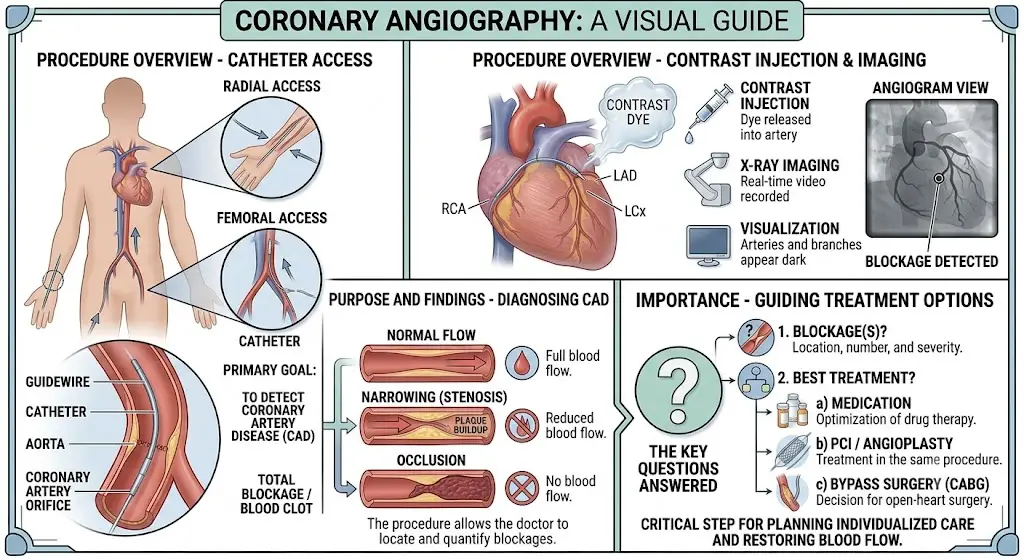
Many of these procedures are performed through a catheter based approach. A thin and flexible tube is inserted into a blood vessel and carefully guided toward the heart using advanced imaging.
Specialised devices can then be delivered through the catheter to repair, replace or close specific structures within the heart.
These procedures require careful planning and are generally performed by experienced cardiologists and specialised cardiac teams.
The development of structural heart interventions has created new treatment opportunities for patients who may not be suitable candidates for conventional surgery.
Heart Valve Interventions
Heart valve disease is one of the most common forms of structural heart disease.
The heart contains four valves that ensure blood flows in the correct direction. When these valves become severely narrowed or fail to close properly, the heart may need to work harder to maintain adequate blood circulation.
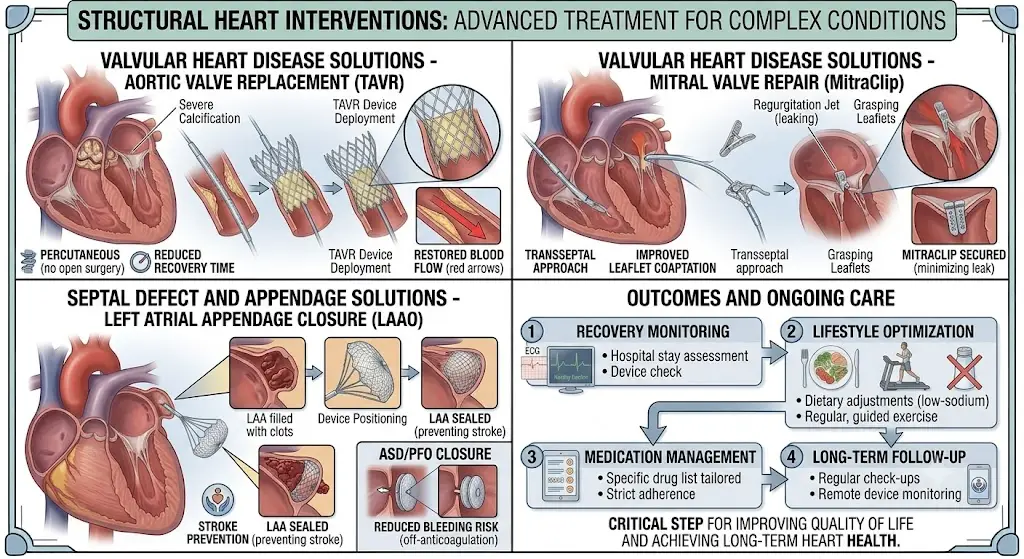
One important structural heart intervention is transcatheter aortic valve replacement. This procedure may be considered for selected patients with severe narrowing of the aortic valve.
During the procedure, a replacement valve is delivered to the heart through a catheter. The new valve is positioned inside the diseased valve and begins functioning to improve blood flow.
Another area of structural heart intervention involves the treatment of mitral valve disease. Certain patients with significant leakage of the mitral valve may benefit from catheter based procedures designed to improve valve function.
The most suitable treatment depends on the patient’s anatomy, symptoms, age and overall health.
Closure of Heart Defects
Structural heart interventions can also be used to close certain abnormal openings in the walls separating the heart chambers.
One example is an atrial septal defect. This is an opening in the wall between the two upper chambers of the heart.
Another example is a ventricular septal defect, which involves an opening between the lower chambers of the heart.
Some defects may be suitable for closure using a catheter based technique. A specialised closure device is delivered through the blood vessels and positioned over the opening.
Once the device is properly placed, it can help close the abnormal connection and restore more normal blood flow.
These procedures can be particularly beneficial for appropriately selected patients who may otherwise require a more invasive surgical approach.
Treatment for Patent Foramen Ovale
A patent foramen ovale is a small opening between the upper chambers of the heart that may remain open after birth in some individuals.
For many people, a patent foramen ovale does not cause symptoms and may never require treatment.
However, in selected situations, a cardiologist may consider closure of the opening. The decision depends on several medical factors and requires a detailed assessment of the patient’s overall health and clinical history.
When appropriate, a closure device may be placed through a catheter based procedure.
Careful evaluation is essential because not every patient with this condition requires an intervention.
The Importance of Advanced Cardiac Imaging
Structural heart interventions require a highly detailed understanding of the patient’s heart anatomy.
Advanced imaging plays a central role in the planning and performance of these procedures.
Echocardiography allows doctors to evaluate the structure and function of the heart using sound waves. It can provide important information about heart valves, blood flow and the movement of the heart chambers.
Transesophageal echocardiography may provide additional detail by obtaining images from a position closer to the heart.
Computed tomography can also be used to create detailed images of the heart and blood vessels. This information can help the medical team plan the size and placement of specialised devices.
During the intervention, advanced imaging helps the cardiologist guide catheters and accurately position the treatment device.
Careful imaging before, during and after the procedure contributes significantly to patient safety and treatment success.
How Are Structural Heart Procedures Performed?
The exact process depends on the specific heart condition being treated.
Many structural heart procedures are performed through a minimally invasive approach. The patient is prepared and carefully monitored throughout the intervention.
A catheter is inserted into a suitable blood vessel and guided toward the heart. Advanced imaging is used to ensure accurate positioning.
Once the catheter reaches the appropriate area, the specialised treatment device is carefully delivered.
This may involve placing a replacement valve, repairing an existing valve or closing an abnormal opening.
After the device has been positioned successfully, the cardiology team carefully evaluates its function before completing the procedure.
The catheter is then removed, and the patient is transferred to a recovery area for monitoring.
Benefits of Minimally Invasive Structural Heart Interventions
One of the most important advantages of catheter based treatment is that it may avoid the need for a large surgical incision.
For selected patients, this can result in a shorter recovery period and reduced physical stress compared with conventional open heart surgery.
These procedures may also provide important treatment options for older patients or those with other medical conditions that increase surgical risk.
However, minimally invasive treatment is not automatically the best option for every patient.
The decision depends on the type of structural heart disease, the complexity of the condition and the patient’s overall health.
A detailed evaluation by an experienced cardiac team is necessary to determine the most appropriate approach.
Possible Risks and Complications
Structural heart interventions are advanced medical procedures and carry certain potential risks.
Possible complications can include bleeding, infection, injury to a blood vessel or complications related to the placement of the treatment device.
There may also be a risk of abnormal heart rhythms or other cardiac complications.
The level of risk varies depending on the specific procedure and the patient’s medical condition.
Before recommending an intervention, the cardiac team carefully evaluates the potential benefits and risks.
Patients should discuss any concerns with their treating cardiologist and ensure they understand the reasons for the recommended treatment.
Recovery After a Structural Heart Intervention
Recovery depends on the type of intervention and the overall condition of the patient.
After the procedure, patients are closely monitored to ensure that the heart and circulation are functioning properly.
The medical team may perform follow up imaging to evaluate the treatment result.
Some patients may recover relatively quickly, while others may require a longer period of observation and rehabilitation.
Patients should follow all instructions regarding medications, physical activity and follow up appointments.
Regular cardiac monitoring remains important after structural heart treatment.
The Role of the Heart Team
Structural heart interventions often involve a multidisciplinary approach.
A heart team may include interventional cardiologists, cardiac surgeons, imaging specialists, anaesthesiologists and other healthcare professionals.
The team carefully reviews the patient’s condition and discusses the most appropriate treatment strategy.
This collaborative approach helps ensure that each patient receives a treatment plan based on their individual medical needs.
The choice between medication, catheter based intervention and surgery should always be guided by a thorough evaluation.
Conclusion
Structural heart interventions represent a major advancement in modern cardiac care. These specialised procedures allow experienced heart teams to treat certain valve disorders and structural abnormalities using minimally invasive techniques.
Advanced imaging, specialised devices and careful treatment planning have expanded the options available to patients with complex heart conditions.
However, every structural heart condition is unique. The most appropriate treatment depends on the specific problem, the patient’s symptoms and their overall health.
If you experience persistent breathlessness, unexplained fatigue, reduced exercise capacity or other symptoms that may suggest a heart problem, timely cardiac evaluation is important.
With early diagnosis, advanced treatment and expert follow up care, many patients with structural heart disease can achieve improved heart function and a better quality of life.

Newsletter
Sign up our newsletter to get update information, news and free insight.
Popular Categories
Latest Post